How to Track Calories When You Eat Out
By Hannah Whitlock · Published October 22, 2026 · Updated October 22, 2026
Restaurant meals are where calorie logs drift the most, because portions are bigger and the oil and butter are invisible. A few habits keep the numbers close without turning dinner into homework.
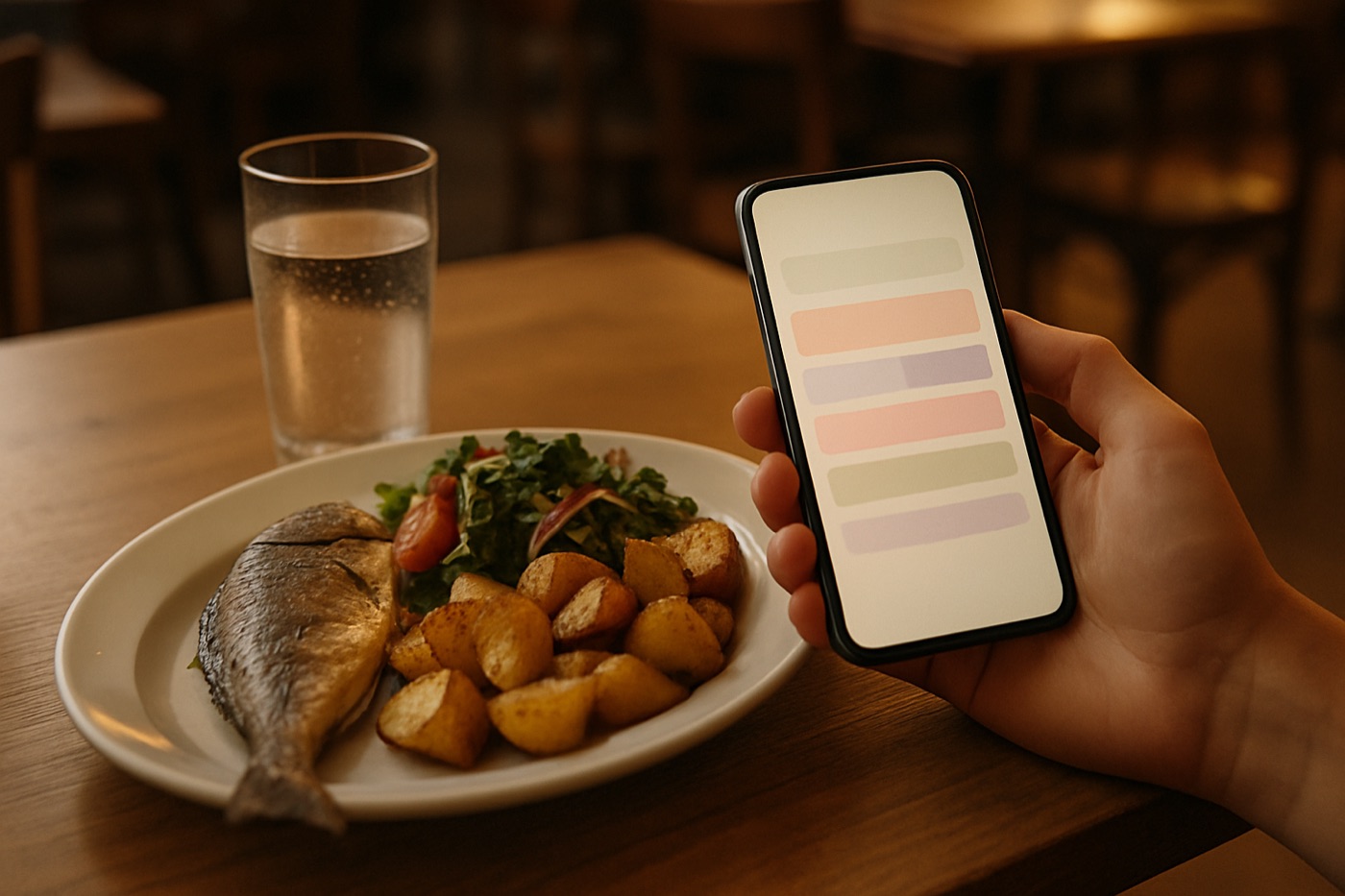
Eating out is not the enemy of calorie tracking. Skipping the log is. A rough entry for a restaurant meal keeps your week honest; a missing entry makes the whole week look better than it was. The goal is a good estimate in under a minute.
1. Use posted calories when you can
In the United States, restaurant chains with 20 or more locations have had to show calories on menus and menu boards since 2018, and most publish full nutrition information online. If the place you are eating has that information, use it. Search your app for the chain and the dish name; many trackers carry chain menus already.
2. Otherwise, log the closest match, then adjust the portion
At an independent restaurant, find the closest equivalent food in your app: “grilled salmon”, “roast potatoes”, “side salad with vinaigrette”. Then think about size. Restaurant portions are usually larger than the default serving in a database, often by half or more for pasta, rice and fries.
3. Add what you cannot see
Kitchens use fat generously because it tastes good. A tablespoon of oil or butter is roughly 100 to 120 calories, and a sautéed, roasted or grilled dish often has at least that much. When in doubt, log one tablespoon extra. Dressings and sauces deserve their own entries.
4. Photograph before the first bite
A quick photo serves two purposes. If your app has photo logging, it gives you a starting estimate. Even if it does not, the photo lets you log later with a clear memory of the portion rather than a guess.
5. Don’t forget drinks and bread
The bread basket, a cocktail, a glass of wine and a shared dessert can add as much as the main course. Log them. Our guide to tracking alcohol has typical values.
Hidden calories, itemized
These are the additions that most often go unlogged. Values are approximate and vary by kitchen:
| Item | Typical amount | Calories (approx.) |
|---|---|---|
| Bread basket with butter | 2 rolls and 2 pats | 300–350 |
| Oil on sautéed vegetables | 1 tablespoon | 120 |
| Butter finishing a steak | 1 tablespoon | 100 |
| Vinaigrette on a side salad | 3 tablespoons | 150–220 |
| Creamy sauce on pasta | ½ cup | 200–400 |
| Tortilla chips and salsa | 1 basket shared | 400–600 for the basket |
| Fries as a side | 1 restaurant portion | 400–500 |
| Glass of wine | 175 ml (6 oz) | 140–160 |
Two or three of these can add as much as a whole meal. Logging them is where most of the accuracy comes from.
Cuisine by cuisine
A few patterns help when there is no menu to check:
- Italian. The pasta portion is the big variable; restaurant plates often hold two to three cups of cooked pasta. Tomato-based sauces are lighter than cream, butter or cheese sauces. Pizza is easiest logged by the slice and the size of the pie.
- Mexican. The chips, cheese, sour cream and rice add up quickly. Fajitas and grilled meat with salsa and beans are easier to estimate than large burritos.
- Chinese and Thai. Stir-fries and curries carry oil and sugar in the sauce. Steamed dishes and broth soups are lighter; a full portion of fried rice or noodles is a meal on its own.
- Indian. Many curries are cooked with ghee, cream or coconut milk. Tandoori dishes, dal and vegetable sides are usually lighter; naan and rice are generous.
- Japanese. Sashimi and nigiri are simple to log; tempura, special rolls with mayonnaise sauces and ramen broths are denser than they look.
- Burgers and steakhouses. Log the meat by its menu weight where it is listed, then the bun, cheese, sauces and sides separately.
Shared plates and buffets
Tapas, mezze and family-style dinners are hard to log because nobody eats an equal share. Count roughly how many pieces or spoonfuls you took of each dish and log them as servings of the closest match. At a buffet, take one plate, photograph it, and log that plate before going back.
Eating out often
If you eat out several times a week, for work or travel, two habits help most. First, find two or three reliable orders at the places you visit regularly and save them as favourites in your app. Second, plan the rest of the day around the restaurant meal: a lighter breakfast and lunch leave room for dinner without blowing the week.
Ordering tips if you are in a deficit
- Ask for sauces and dressings on the side, then log what you use.
- Choose grilled or roasted over fried, and swap one starchy side for vegetables.
- Split a dessert rather than skipping the occasion.
- Eat slowly; you will often stop before the plate is empty.
How apps help
The faster an app makes this, the more likely you are to do it. Photo logging is especially useful at restaurants because mixed plates are tedious to type. Trackers that let you confirm and edit the estimate let you fix the portion and add the hidden oil in a couple of taps.
If you went over
One large restaurant meal does not undo a week. The scale may jump the next morning, mostly from salt, carbohydrate and the weight of the food itself, and settle within a few days; see why weight fluctuates. Log it, return to your usual targets at the next meal, and do not try to compensate by skipping meals the next day.
The bottom line
A restaurant meal logged within 20% is far more useful than a perfect log of everything except restaurant meals. Estimate, add the fat, include drinks, move on.
Related guides: Track alcohol calories · Calorie tracking on weekends · Track calories without a food scale
Questions readers ask
How do you count calories at a restaurant?
Use the restaurant's published calories if it has them (most US chains do), otherwise log the closest match in your app and add a tablespoon of oil or butter for anything sautéed, roasted or grilled. Photograph the plate before you eat so you can adjust the portion afterwards.
Are restaurant calorie counts accurate?
They are a reasonable guide but not exact. Studies have measured restaurant meals with more calories than stated, so treat posted numbers as a floor rather than a ceiling.
How many calories are in a typical restaurant meal?
More than most people guess. A 2016 study led by Tufts University researchers measured popular meals at non-chain restaurants in three US cities and found an average of about 1,200 calories per meal, before drinks, appetizers or dessert.
What should I do if I forgot to log a restaurant meal?
Log it as soon as you remember, even roughly. An estimate a day late is far more useful than a gap. If you have a photo of the plate, use it; otherwise log the closest dish and a generous portion.
More: Guides · Reviews · Comparisons · The 2027 ranking