How to Track Calories in Alcohol
By Hannah Whitlock · Published October 22, 2026 · Updated October 22, 2026
Alcohol has about 7 calories per gram, nearly as many as fat, and drinks are among the entries people most often forget to log. Here are typical values and how to log a night out.
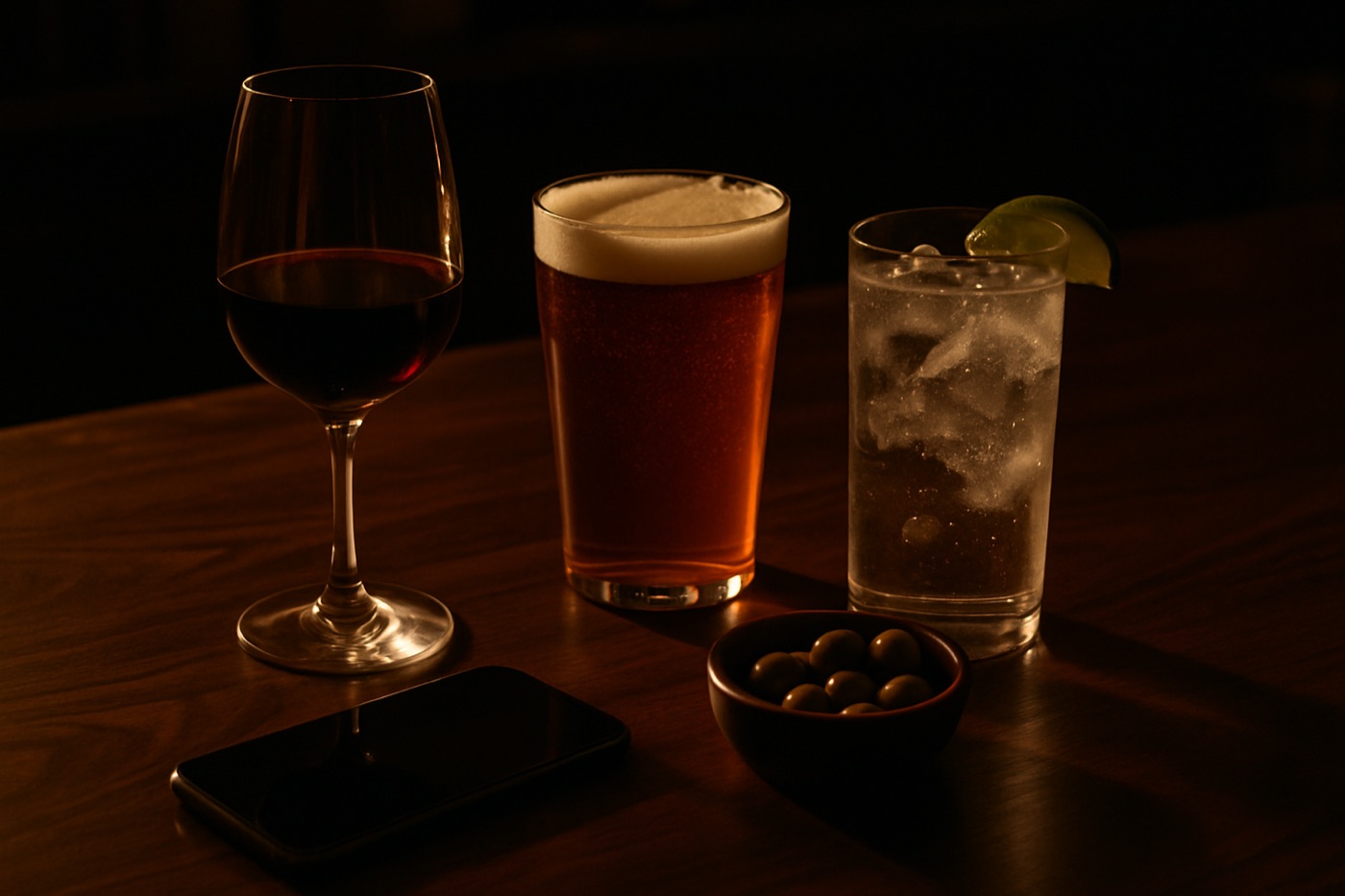
A night out can add 500 calories without a single bite of food, and drinks are often missing from food logs entirely. Logging them is quick once you know the typical values.
Why alcohol counts
Pure alcohol provides about 7 calories per gram, compared with 4 for carbohydrate and protein and 9 for fat. A US “standard drink” contains 14 grams of pure alcohol, so roughly 100 calories come from the alcohol alone, before any sugar from the mixer, wine or beer.
Typical values
| Drink | Serving | Calories (approx.) |
|---|---|---|
| Regular beer (about 5%) | 12 oz / 355 ml | 150 |
| Light beer | 12 oz / 355 ml | 100 |
| Wine, red or white | 5 oz / 150 ml | 120–130 |
| Spirits (80 proof) | 1.5 oz / 44 ml | 95–100 |
| Gin and tonic | 1.5 oz gin + regular tonic | 170–200 |
| Margarita | Restaurant serving | 250–400+ |
Values vary by brand, strength and pour; use the label or the drink’s own entry when you can.
More drinks, approximately
| Drink | Serving | Calories (approx.) |
|---|---|---|
| Hard seltzer | 12 oz / 355 ml | 100 |
| Strong IPA (about 7%) | 12 oz / 355 ml | 200–250 |
| Cider | 1 pint / 568 ml | 200–230 |
| Prosecco or sparkling wine | 4 oz / 125 ml | 80–100 |
| Sake | 6 oz / 180 ml | 230–250 |
| Mojito | Restaurant serving | 160–250 |
| Piña colada | Restaurant serving | 300–500 |
| Spirit with diet mixer | 1.5 oz spirit | 95–100 |
Working it out yourself
For a drink that is not in your app, you can estimate it from the strength on the label. The alcohol calories are:
millilitres × ABV (as a decimal) × 0.79 × 7
The 0.79 converts volume of alcohol into grams; 7 is the calories per gram. For a 355 ml beer at 5%: 355 × 0.05 × 0.79 × 7 ≈ 98 calories from alcohol. Add the carbohydrate on the label (often 10 to 15 grams in a regular beer, at 4 calories a gram) and you arrive at about 150. For wine, the alcohol accounts for most of the total; for cocktails, the mixer and syrup often add as much again.
How to log a night out
- Log as you go, or photograph each drink so you can log them the next morning.
- Count pours, not glasses: restaurant wine glasses and home pours are often larger than 5 oz.
- Add the mixer: regular tonic, soda and juice add sugar calories; diet versions add almost none.
- Log the food that comes with it: bar snacks and late-night meals are the real hidden calories.
Alcohol and appetite
The calories in the glass are only half the story. Alcohol tends to lower inhibitions around food, and many people eat more on evenings when they drink and the following day. If you notice a pattern of late-night snacks or a big breakfast after drinking, log those meals too: they are part of what alcohol costs your calorie budget.
Practical ways to cut back without stopping
- Alternate each alcoholic drink with water or a zero-calorie soft drink.
- Choose smaller servings: a small glass of wine, a half-pint, a single measure.
- Use zero-calorie mixers and skip syrups and juices.
- Set a number before you go out and log each drink as you order it.
- Try alcohol-free beers and wines, which are often a third to a half of the calories of the regular version.
Health context
The 2020–2025 Dietary Guidelines for Americans advised adults who drink to limit intake to two drinks or fewer a day for men and one or fewer for women, and noted that drinking less is better for health than drinking more. If you are trying to lose weight, alcohol is often the easiest place to find calories to cut.
Drinking during pregnancy, while taking certain medications, before driving or with some health conditions is unsafe. If you are concerned about how much you drink, talk to a doctor.
Apps that track alcohol
Most trackers let you log drinks as food entries. Some track alcohol as its own line alongside the rest of your nutrients, so you can see what share of your week’s calories came from drinks.
The bottom line
Alcohol is energy-dense and easy to forget. Count pours rather than glasses, add the mixer, log the food that comes with it, and you will see exactly what your drinks cost in a week.
Related guides: Calorie tracking on weekends · Track calories at restaurants · Calorie density
Questions readers ask
How many calories are in a glass of wine?
A standard 5 oz (150 ml) glass of wine has roughly 120 to 130 calories, depending on the wine. Large pours in restaurants are often 6 to 9 oz.
How many calories are in a beer?
A 12 oz (355 ml) regular beer has about 150 calories; light beers are around 100. Craft and high-strength beers can be 200 to 300 or more.
Does alcohol stop fat loss?
Not directly, but while your body is processing alcohol it uses it for energy before fat, and drinks add calories and often lead to more eating. Moderate, logged drinking can fit into a calorie target; frequent heavy drinking makes a deficit much harder.
Which alcoholic drinks have the fewest calories?
Spirits with a zero-calorie mixer such as soda water or diet tonic, light beer, hard seltzer and dry wine in a measured glass are among the lowest. Cocktails with juice, syrup, cream or coconut are the highest.
More: Guides · Reviews · Comparisons · The 2027 ranking