Why Your Weight Goes Up and Down Every Day
By Theo Marchetti · Published October 22, 2026 · Updated October 22, 2026
Daily weight can swing by a kilogram or more without any change in body fat. Water, salt, carbohydrates, digestion and hormones explain most of it, which is why the trend over weeks matters more than any single weigh-in.
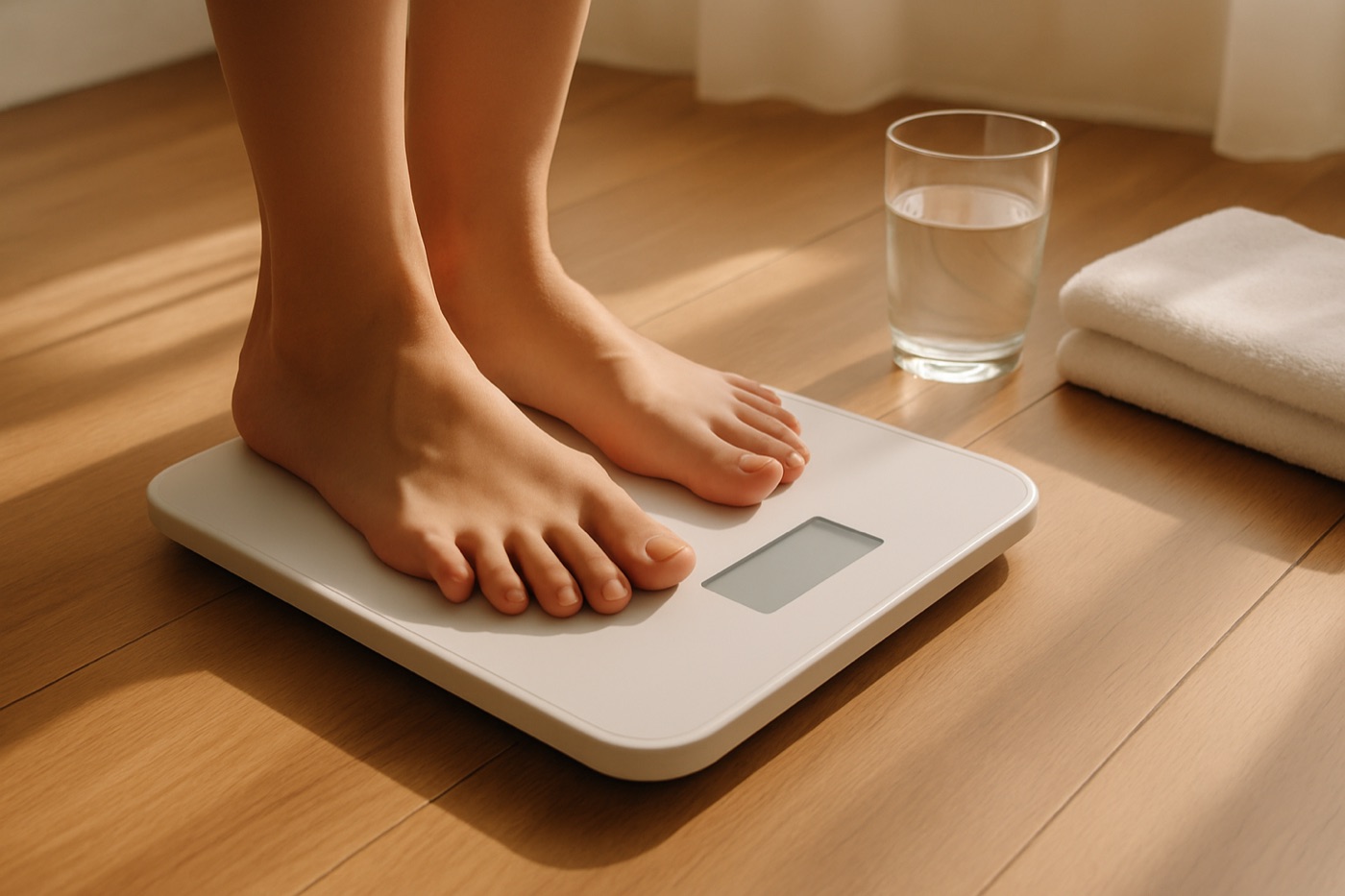
You ate well, stayed on target, and the scale went up. This is the moment many people give up on tracking, and it is almost always a misunderstanding. Body fat changes slowly; body water changes fast.
What moves the scale day to day
Water and salt. A salty restaurant meal makes your body hold extra water for a day or two. The scale rises; your fat does not.
Carbohydrate stores. Your muscles and liver store carbohydrate as glycogen, and each gram is stored with roughly three grams of water. After a carb-heavy day, glycogen and the water with it go up. This is also why the first week of a low-carb diet shows a dramatic, mostly-water drop.
Food in transit. The meal you ate last night is still in your digestive system. Its weight is on the scale until it is not.
Exercise. A hard or new workout causes muscle inflammation and water retention that can mask fat loss for several days.
Hormones. Many women see weight rise in the days before a period, mostly from water retention, and fall afterwards.
Sleep and stress. Poor sleep and stress hormones can affect water retention and appetite.
Alcohol and travel. A night of drinking can dehydrate you, then be followed by water retention. Flights, time-zone changes and different food on holiday often add a temporary kilogram or two that disappears within a week of normal routine.
Medication. Some medicines, including certain steroids and others, can cause water retention. If you have started a new medication and see a change, ask your pharmacist or doctor rather than changing your diet.
How big are the swings?
For many adults, day-to-day changes of 0.5 to 1.5 kilograms (1 to 3 pounds) are normal, and larger swings happen after holidays, travel or big changes in salt and carbohydrate intake. A real change in body fat of a kilogram requires a cumulative energy imbalance of thousands of calories, which does not happen overnight.
A worked example
Here is what two weeks of morning weigh-ins can look like for someone who is genuinely losing about half a kilogram a week:
| Day | Week 1 (kg) | Week 2 (kg) |
|---|---|---|
| Mon | 82.4 | 82.0 |
| Tue | 82.1 | 81.6 |
| Wed | 82.6 | 81.9 |
| Thu | 81.9 | 81.4 |
| Fri | 82.0 | 81.5 |
| Sat | 82.9 | 81.8 |
| Sun | 82.5 | 81.6 |
| Average | 82.3 | 81.7 |
Look at Saturday of week 1: the highest reading of the fortnight, the morning after a restaurant dinner. On its own it looks like a setback. In the averages, the person is down 0.6 kg in a week. The daily numbers bounce; the weekly averages tell the truth.
How to read your weight properly
- Weigh at the same time and in the same way: morning, after the bathroom, before eating or drinking.
- Weigh several times a week. More data points make the trend clearer.
- Look at the average. Compare this week’s average with last week’s, or use your app’s trend line, which smooths out the noise.
- Give changes time. Judge a new plan over three or four weeks, not three or four days.
Trend lines and moving averages
Many tracking apps and smart scales offer a trend line, usually a moving average that gives more weight to recent readings. It does on screen what the table above does on paper: it filters out the daily noise so you see the direction of travel. If your app does not show one, you can do it yourself by writing down a seven-day average each Sunday.
A trend line also stops you overreacting. Cutting calories sharply after one high reading, or relaxing after one low one, makes progress harder to read. Decide on a review point, such as every two weeks, and only change the plan then.
Other ways to measure progress
The scale is only one measure, and during the first months of strength training it can be a misleading one, because muscle and water can rise while fat falls. Useful companions are:
- Waist measurement, taken at the navel, once a week, at the same time of day.
- Progress photos in the same light and clothing every two to four weeks.
- How clothes fit, especially a pair of trousers that do not stretch.
- Strength and fitness: more repetitions, longer walks, easier stairs.
When to look closer
If your weekly average has not moved for four weeks or more while you are logging carefully, your calorie target probably needs a small adjustment, often 100 to 200 calories. Our guide to weight loss plateaus goes through the checks. Sudden, unexplained weight changes, swelling or other symptoms are a reason to see a doctor.
The bottom line
The scale measures everything in your body, not just fat. Weigh consistently, read the trend, and let the weekly average, not the daily number, decide whether your plan is working.
Related guides: Weight loss plateaus · Calorie tracking on weekends · How many calories do I need?
Questions readers ask
Why did my weight go up overnight?
Usually water. A salty or carb-heavy meal, a hard workout, poor sleep, hormones or simply having more food in your digestive tract can add a kilogram or more overnight. It is not fat; it usually passes within a few days.
How often should I weigh myself?
Several mornings a week at the same time, under the same conditions, and look at the weekly average or trend line rather than any single number.
Why do I weigh more in the evening?
By evening you have eaten and drunk through the day and the food and fluid are still in your body. Weighing 1 to 2 kilograms more at night than in the morning is common, which is why morning weigh-ins are easier to compare.
Can I gain fat from one big meal?
Not much. Gaining a kilogram of body fat takes a surplus of several thousand calories. The jump after a large meal is mostly the weight of the food, extra water held with salt and carbohydrate, and stored glycogen. It typically fades over two to four days of normal eating.
Should I stop weighing myself if it upsets me?
For some people, yes. You can track progress with a weekly weigh-in, a waist measurement, how clothes fit or progress photos instead. The goal is useful feedback, not stress.
More: Guides · Reviews · Comparisons · The 2027 ranking