Calorie Tracking for Beginners – Your First Two Weeks
By Theo Marchetti and Hannah Whitlock · Published October 22, 2026 · Updated October 22, 2026
The first two weeks decide whether calorie tracking becomes a habit. This plan keeps them simple, with one small job per stage, so you learn the skill without burning out.
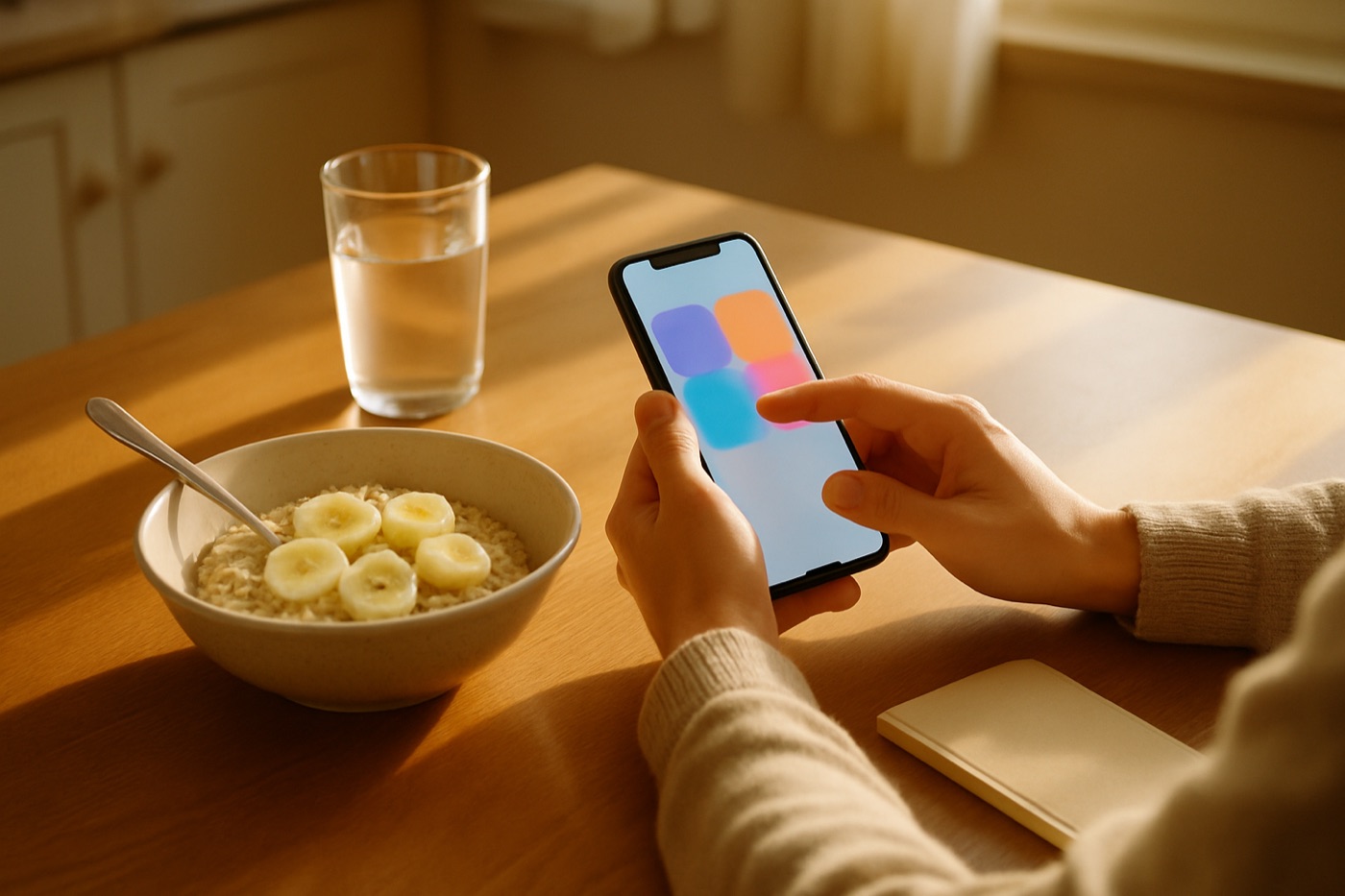
Most people quit calorie tracking in the first fortnight, usually because they try to change everything at once. This plan separates the two skills, logging and adjusting, and gives each one a week.
Day 1: Set up
- Choose one app and stick with it. Our 2027 ranking and the app reviews explain the options; pick the one whose way of logging suits you.
- Set your goal. The app turns your weight, height, age and activity into a daily calorie target.
- Connect Apple Health or Health Connect so steps and workouts count.
Days 1–7: Log, don’t change
For the first week, eat exactly as you normally would and log everything. This is not a diet week; it is a measurement week. You will learn:
- where your calories actually come from,
- which meals are easy to log and which are hard,
- how far your normal day is from your target.
Use the fastest method for each food: barcode for packages, a photo for plates, a quick search or voice entry for simple things. Save any meal you eat more than twice.
Days 8–14: Adjust gently
Now compare your average with your target and make one or two changes at a time:
- Swap one high-calorie habit (a daily pastry, a sugary drink, a second glass of wine).
- Add protein to breakfast; it tends to make the rest of the morning easier.
- Plan your bigger meals rather than avoiding them. See our weekend guide.
What to log, and how carefully
Not every entry deserves the same effort. Beginners often spend ten minutes searching for the perfect cucumber entry and then forget the cooking oil. A simple rule of thumb:
| Effort | Foods |
|---|---|
| Measure or weigh at least once | Oils, butter, nut butters, nuts, cheese, cereal, granola, rice, pasta |
| Log carefully | Drinks (including coffee with milk), snacks, sauces, desserts |
| Log quickly | Meat and fish portions, bread, fruit |
| Log roughly | Plain vegetables, salad leaves, herbs |
Build your food library
The fastest trackers are the ones that already know your regular foods. In the first week:
- Save your usual breakfast as a meal so it takes one tap.
- Save the recipes you cook most often; our guide to logging home-cooked recipes shows how.
- Mark favourite products you buy every week.
By the third week most people find that 70 to 80 percent of what they log is a repeat of something already saved.
Reading your first week
At the end of the first week, look at three things rather than every number:
- Your average daily calories compared with your target.
- Your biggest single sources of calories. They are often drinks, snacks between meals, cooking fats or one large meal.
- Your protein at each meal. Breakfast and snacks are usually where it is lowest.
The first week is information, not a grade. Whatever it shows is the starting point you were looking for.
Weigh in, but watch the trend
Weigh yourself a few mornings a week at the same time. Daily numbers jump around with water and salt; the trend over two to four weeks is what matters.
Five beginner mistakes
- Setting a very aggressive target. A deficit of 300 to 500 calories a day is easier to sustain than 1,000. See how many calories you need.
- Changing everything on day one. Logging and dieting are two separate skills; learning both at once is the usual reason people quit.
- Skipping the hard entries. A restaurant meal logged roughly is worth more than a perfect log of everything else.
- Eating back every exercise calorie. Activity estimates from watches and apps are often high; many people eat back half, or none.
- Judging by daily weight. Water swings hide progress for days at a time; see why weight fluctuates.
Signs it is working
- Logging takes a few minutes a day, not twenty.
- Your weekly average is close to your target.
- Your weight trend is moving in the direction you want, slowly.
After the first two weeks
Once logging feels routine, most people settle into one of three patterns:
- Keep logging everything, which suits people who like the data and want steady progress.
- Log on weekdays and estimate weekends, which keeps the habit with less effort; our weekend guide covers the risks.
- Log in blocks, such as one week a month, to check that portions have not drifted.
There is no single right answer. The best pattern is the one you can keep up for months.
When to get help
Calorie tracking is not for everyone. If logging makes you anxious or obsessive, or you have a history of disordered eating, stop and talk to a doctor or registered dietitian. If you have diabetes or another medical condition, or are pregnant, set targets with a clinician.
Next: how to track calories at restaurants and how to log a home-cooked recipe.
Questions readers ask
How do I start counting calories?
Pick one app, set a calorie target from your goal, and for the first week just log everything you eat without changing it. In the second week, start making small adjustments toward your target.
How long does it take to get used to counting calories?
Most people find logging much faster after two or three weeks, once their regular foods and meals are saved. The first week is the slowest.
Do I need to log vegetables?
It helps for completeness, but plain vegetables are so low in calories that small errors barely matter. Log them quickly and spend your attention on oils, sauces, snacks and drinks, where errors are large.
What if I miss a day?
Log what you remember and carry on. A missing day is not a failure; missing several in a row is when the habit fades. Even a rough entry keeps the streak and the data going.
Is calorie counting safe for everyone?
No. People with a history of eating disorders, those who find tracking causes anxiety, people who are pregnant and anyone with a medical condition affecting diet should get advice from a doctor or registered dietitian before counting calories.
More: Guides · Reviews · Comparisons · The 2027 ranking