How Much Protein to Eat While Losing Weight
By Theo Marchetti · Published October 22, 2026 · Updated October 22, 2026
When you eat less to lose weight, protein helps protect muscle and keeps you fuller. A practical target for most adults in a calorie deficit is about 1.2 to 1.6 grams per kilogram of body weight a day, spread across meals.
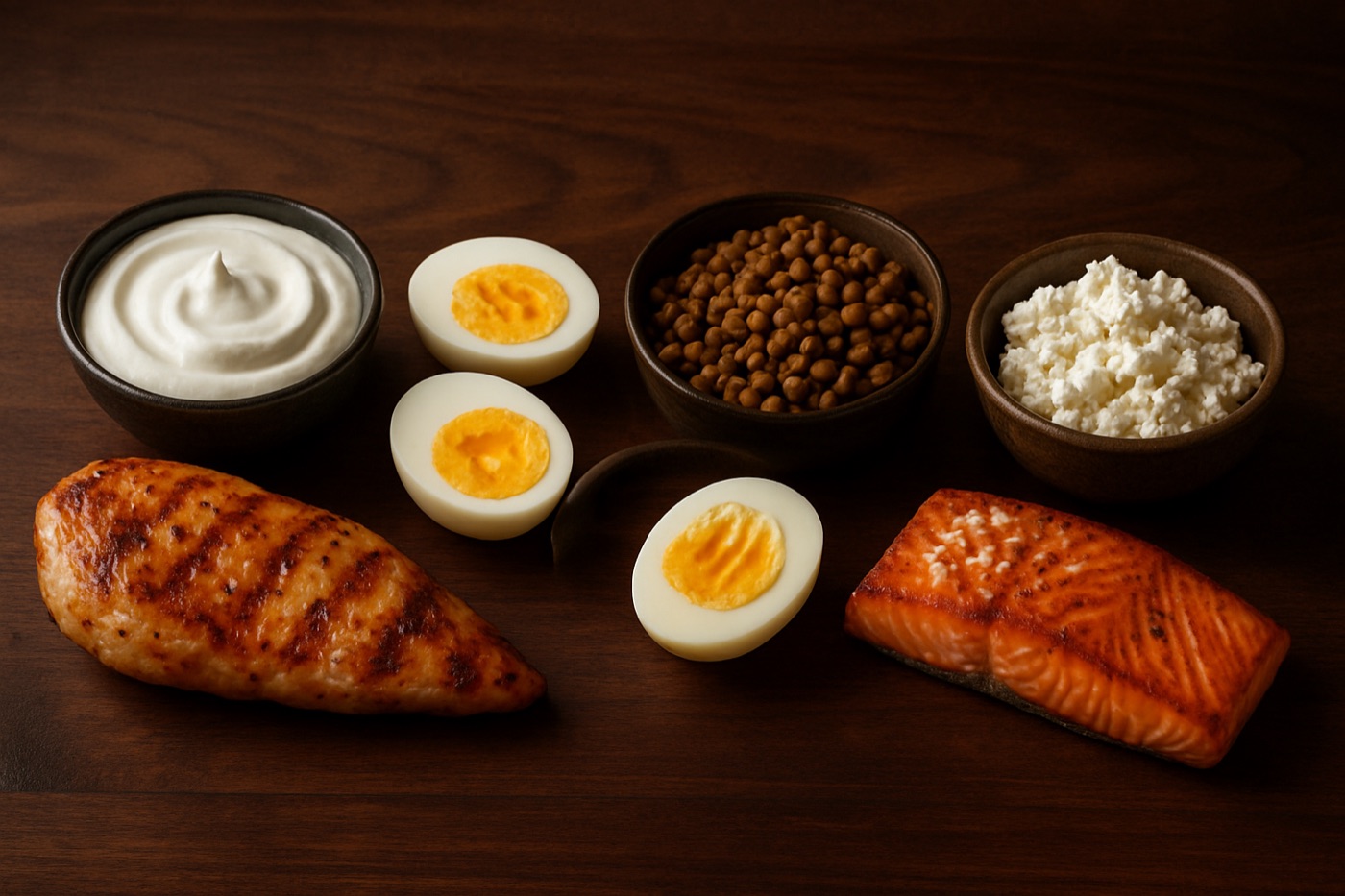
When you eat fewer calories than you burn, your body draws on stored energy. Ideally that energy comes from fat, but a deficit can also cost muscle, especially without strength training and enough protein. Muscle matters: it supports strength, everyday function and long-term metabolism. Protein is the nutrient that does most to protect it.
How much
| Situation | Grams per kg of body weight per day |
|---|---|
| Minimum for most adults (RDA) | 0.8 |
| Losing weight, general activity | 1.2–1.6 |
| Losing weight while strength training | 1.6–2.2 |
The 0.8 g/kg figure is the Recommended Dietary Allowance: enough to prevent deficiency in most healthy adults, not an optimal target for someone in a deficit. For people trying to build muscle with resistance training, a large 2018 meta-analysis (Morton and colleagues, British Journal of Sports Medicine) found that extra protein stopped adding benefit at around 1.6 g/kg a day, with the upper estimate near 2.2 g/kg.
Example: a 75 kg (165 lb) person losing weight would aim for roughly 90 to 120 g of protein a day.
If you have a lot of weight to lose, calculate with your goal weight or a weight in the healthy range rather than your current weight; protein needs follow lean mass more than total mass.
Working out your own number
You only need two steps.
- Pick the weight to use. If you are within roughly 10 to 15 kg (20 to 30 lb) of where you want to be, use your current weight. If you have more to lose, use your goal weight, or the top of the healthy range for your height.
- Pick a multiplier. Use 1.2 g/kg if you are mostly sedentary or just starting, 1.4 to 1.6 if you are active, and 1.6 or more if you lift weights regularly and want to keep as much muscle as possible.
| Weight used | 1.2 g/kg | 1.6 g/kg | 2.0 g/kg |
|---|---|---|---|
| 55 kg (121 lb) | 66 g | 88 g | 110 g |
| 65 kg (143 lb) | 78 g | 104 g | 130 g |
| 75 kg (165 lb) | 90 g | 120 g | 150 g |
| 85 kg (187 lb) | 102 g | 136 g | 170 g |
| 95 kg (209 lb) | 114 g | 152 g | 190 g |
Round to something easy to remember. A target of “about 100 grams” that you actually hit is worth more than a precise 112 grams that you ignore.
Why it helps
- Fullness. Protein tends to be more satiating than the same calories from carbohydrate or fat, which makes a deficit easier to live with.
- Muscle retention. Adequate protein plus resistance training helps the weight you lose be mostly fat.
- Digestion cost. Your body uses more energy to digest protein than other macronutrients, a small but real effect.
Spreading it over the day
Many people eat little protein at breakfast and most at dinner. Sports-nutrition guidance suggests roughly 20 to 40 grams per meal across three or four meals. Breakfast is usually the easiest place to add some.
Approximate protein in common foods
| Food | Serving | Protein (approx.) |
|---|---|---|
| Chicken breast, cooked | 100 g (3.5 oz) | 31 g |
| Canned tuna, drained | 100 g | 25 g |
| Salmon, cooked | 100 g | 22–25 g |
| Greek yogurt, plain non-fat | 170 g (6 oz) | 17 g |
| Cottage cheese | 1 cup | 25 g |
| Lentils, cooked | 1 cup | 18 g |
| Firm tofu | 100 g | 12–17 g |
| Egg | 1 large | 6 g |
| Milk | 1 cup | 8 g |
Values vary by brand and preparation; check labels where you can.
What a 120-gram day looks like
Numbers on a table are abstract until you see them on a plate. Here is one ordinary day that lands close to 120 grams without protein shakes or unusual foods:
| Meal | Food | Protein (approx.) |
|---|---|---|
| Breakfast | 170 g Greek yogurt with ½ cup oats and berries | 22 g |
| Lunch | 120 g grilled chicken in a large salad | 37 g |
| Snack | ½ cup cottage cheese with fruit | 12 g |
| Dinner | 150 g salmon, ½ cup lentils, vegetables | 42 g |
| Through the day | 1 cup milk in coffee or tea | 8 g |
| Total | about 121 g |
The pattern matters more than the specific foods: one clear protein source at every meal, and a protein-containing snack instead of one that is mostly starch or sugar.
Plant-based protein
Vegetarians and vegans can hit the same targets. A few things help:
- Combine sources across the day. Grains and legumes complement each other’s amino acids, but they do not have to be eaten at the same meal.
- Lean on soy. Tofu, tempeh, edamame and soy milk are among the most protein-dense plant foods and have a complete amino acid profile.
- Aim slightly higher. Plant proteins are a little less digestible on average, so targeting the upper half of your range compensates.
- Watch the calories that come with it. Beans and lentils bring carbohydrate; nuts and seeds bring a lot of fat. They are excellent foods, but they count toward your calories in a way that chicken breast or egg whites do not.
Protein on a budget
Protein does not have to be expensive. Per gram, some of the cheapest sources in most supermarkets are dried lentils and beans, eggs, canned tuna or sardines, milk, plain yogurt in large tubs, cottage cheese, frozen chicken thighs and tofu. Buying a large pack of chicken or a bag of dried lentils and cooking once for several days usually costs far less than ready-made high-protein products.
Older adults
Muscle becomes harder to keep with age, and some expert groups suggest that healthy adults over about 65 aim for at least 1.0 to 1.2 g/kg a day, and more when they are losing weight or recovering from illness. If you are older and dieting, protein and strength training matter even more, and it is worth talking to your doctor about a target that suits your health.
Common mistakes
- Using a target based on a very high current weight. It produces numbers that are hard to eat and unnecessary. Use a goal or healthy-range weight instead.
- Counting protein bars and shakes as the plan. They are convenient, but whole foods bring fiber, vitamins and more fullness per calorie.
- Forgetting that protein foods carry calories too. Fatty cuts of meat, cheese and nuts are high in protein and high in energy. Lean sources make it easier to fit protein inside a deficit.
- Ignoring strength training. Protein protects muscle best when the muscle is being used. Two or three sessions a week is enough for most people.
- Judging after a week. The benefit of protein shows up over months, in how your body composition changes and how manageable your hunger feels.
Tracking it
Most calorie trackers show protein for every entry. During your first week, look at protein per meal rather than just the daily total; the gaps are usually obvious (often breakfast and snacks). Set protein as a daily target in your app so it shows your progress alongside calories.
Safety notes
For healthy adults, intakes up to around 2 g/kg are generally considered safe. People with kidney disease, or those told to limit protein, should follow their clinician’s advice.
The bottom line
In a calorie deficit, aim for about 1.2 to 1.6 g of protein per kg of body weight (more if you lift), spread it across meals, and pair it with strength training. The deficit drives weight loss; protein helps make sure what you lose is mostly fat.
Related guides: How many calories do I need? · How much fiber a day · Weight loss plateaus
Questions readers ask
How much protein should I eat to lose weight?
Around 1.2 to 1.6 grams per kilogram of body weight a day is a common target for adults losing weight, higher than the 0.8 g/kg minimum recommended for the general population. If you have a lot of weight to lose, base it on a goal or healthy-range weight.
Does protein help with weight loss?
Protein tends to be more filling than carbohydrate or fat, and adequate protein together with strength training helps preserve muscle while you lose fat. It does not cause weight loss on its own; the calorie deficit does.
How much protein is that in pounds?
Divide your weight in pounds by 2.2 to get kilograms, then multiply. A 180 lb person weighs about 82 kg, so 1.2 to 1.6 g/kg is roughly 98 to 131 grams a day. A quick shortcut is about 0.55 to 0.75 grams per pound.
Can I get enough protein on a vegetarian or vegan diet?
Yes, with a little planning. Lentils, beans, tofu, tempeh, edamame, seitan, Greek yogurt, eggs and soy milk are good sources. Eating a mix of plant proteins across the day covers all the essential amino acids, and a slightly higher total helps make up for lower digestibility.
Is too much protein bad for you?
For healthy adults, intakes up to about 2 g/kg a day are generally considered safe. People with kidney disease or who have been told to limit protein should follow their clinician's advice.
More: Guides · Reviews · Comparisons · The 2027 ranking